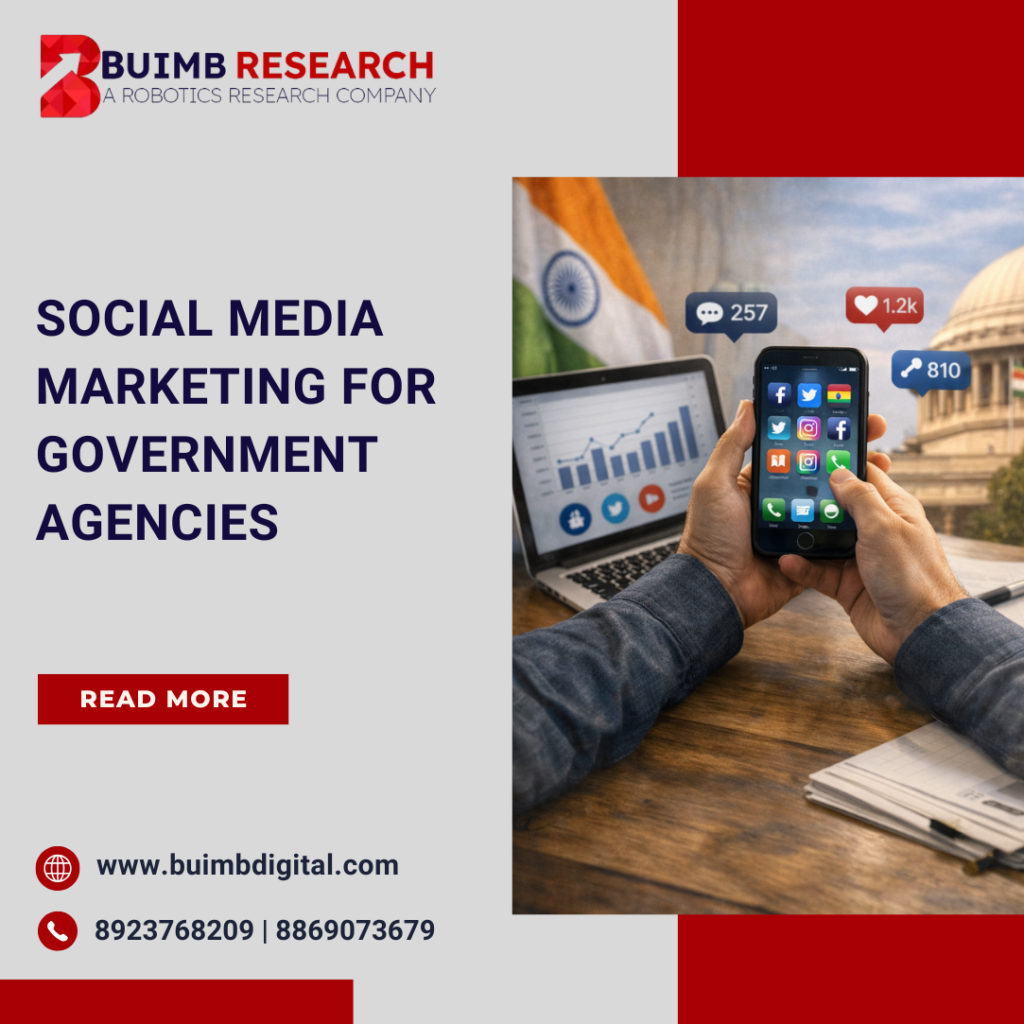
Social Media Marketing for Government Agencies
Trusted by businesses across India, the UK, and the USA.
Social Media Marketing for Government Agencies – If you are looking to generate more leads, improve your online presence, or scale your marketing campaigns effectively, our team can help you achieve measurable results.
From SEO and performance marketing to branding, campaign management, and marketing strategy consulting, we work with businesses to identify growth opportunities and implement marketing solutions that deliver real impact.
Connect with us to explore how the right digital marketing strategy can accelerate your business growth.
Social Media Marketing for Government Agencies
Government agencies today operate in an environment where citizens expect instant updates, transparent communication, and responsive engagement. Notices on office boards or press releases in newspapers are no longer enough. People turn to platforms like Facebook, Instagram, YouTube, and X to receive official information, advisories, and updates.
For government agencies, social media marketing is not commercial promotion. It is public information delivery, citizen awareness, trust building, and service communication at scale. This requires a disciplined, policy-compliant, and professionally managed system.
BUIMB Digital Marketing helps government agencies design and operate structured social media marketing frameworks that ensure clarity, consistency, compliance, and measurable public outreach.
Connect with us to explore how the right digital marketing strategy can accelerate your business growth.
Why Social Media Marketing Is Essential for Government Agencies
In today’s connected world, citizens expect real-time communication, transparency, and accessibility from public institutions. Traditional channels like press notes, newspapers, and TV announcements are no longer enough to keep people informed—especially during emergencies, policy changes, or public service updates. Social media bridges this gap by turning government communication into a two-way, instant, and interactive system.
Platforms such as Facebook, Instagram, X, and YouTube are no longer optional—they are essential public communication tools that function as a digital public notice board, a citizen helpdesk, and a trust-building channel combined.
A professional social media system enables agencies to:
1) Share Time-Sensitive Advisories Instantly
During emergencies—weather alerts, road closures, health advisories, power outages—speed matters. Social media allows departments to publish verified information within seconds and reach thousands (or millions) immediately. Pinned posts, stories, live videos, and alerts ensure critical updates are seen without delay.
2) Increase Awareness of Public Services and Schemes
Many welfare schemes fail to reach beneficiaries simply due to lack of awareness. Structured campaigns with clear creatives, regional language captions, and short videos can explain:
- Eligibility criteria
- Required documents
- Application steps
- Deadlines
This improves participation and ensures schemes reach the intended audience.
3) Handle Citizen Questions and Feedback Efficiently
Comments, inbox messages, and mentions act as a live feedback system. Citizens can ask questions, report issues, or seek clarification. With a managed response workflow, departments can:
- Acknowledge queries quickly
- Provide accurate guidance
- Route complaints to the right teams
This turns social media into a digital helpdesk.
4) Counter Misinformation with Verified Posts
Rumors and fake news spread fast. Official handles act as the single source of truth. Timely myth-busting posts, clarification graphics, and short statements prevent panic and confusion, especially during crises.
5) Maintain Transparency in Operations
Posting regular updates—field work photos, progress reports, campaign activities, inspections, and events—shows citizens what the department is doing on the ground. This builds credibility and public trust.
6) Reach Urban and Rural Audiences Simultaneously
Smartphone penetration in India has made social platforms accessible across regions. Content in local languages, simple visuals, and short videos ensure messages are understood by diverse audiences, including rural communities.
7) Build Trust Through Consistent Communication
Consistency creates familiarity. When citizens regularly see updates from official handles, they begin to rely on them for authentic information. Over time, this becomes a strong trust channel between the government and the public.
8) Support Campaigns, Events, and Public Initiatives
From health drives and education programs to cleanliness missions and voter awareness campaigns, social media amplifies participation through:
- Countdown posts
- Live coverage
- Testimonials
- Impact stories
The Unique Nature of Government Social Media Marketing
Unlike brands, government agencies must ensure:
- 100% factual accuracy
- Approval-based communication
- Archiving for records and audits
- Sensitivity to public sentiment
- Accessibility and clarity for all literacy levels
- Multilingual adaptability
This makes professional management critical.
Common Operational Challenges Faced by Agencies
- Irregular posting and outdated pages
- Text-heavy notices unsuitable for digital users
- Limited staff to manage engagement
- Slow approvals leading to delayed posts
- Fake pages spreading misinformation
- No measurement of communication effectiveness
A structured marketing approach resolves these bottlenecks.
How BUIMB Implements Social Media Marketing for Agencies
For government and public-sector agencies, social media is not handled like commercial brand marketing. It requires accuracy, compliance, speed, accessibility, and public trust. BUIMB follows a structured, process-driven system to ensure every post serves a public communication purpose while maintaining transparency and credibility.
BUIMB manages official presence across platforms such as Facebook, Instagram, X, and YouTube with a governance-first approach.
1) Requirement Understanding & Communication Mapping
BUIMB begins by understanding:
- Department objectives
- Types of information to be shared (advisories, schemes, events, reports)
- Target audience (urban, rural, students, beneficiaries, citizens)
- Approval hierarchy and compliance needs
This becomes the foundation for a communication map that defines what, when, and how information is published.
2) Content Calendar for Structured Communication
A monthly content calendar is created to avoid random posting. It includes:
- Scheme awareness posts
- Public advisories
- Event coverage
- Educational posts
- Important dates and announcements
This ensures consistency and preparedness, especially for time-bound campaigns.
3) Creative Design in Simple, Public-Friendly Language
Government communication must be:
- Easy to understand
- Visually clear
- Free from jargon
- Available in regional language where required
BUIMB designs creatives, carousels, short videos, and infographics that simplify complex information for citizens.
4) Approval Workflow & Compliance Check
Every post goes through:
- Fact verification
- Department approval
- Language and policy compliance
- Accessibility checks
Nothing is posted without authorization, ensuring accuracy and accountability.
5) Real-Time Posting for Advisories & Emergencies
For urgent updates like weather alerts, road closures, health notices, or public safety information, BUIMB maintains a rapid publishing protocol to share verified updates instantly.
6) Citizen Engagement & Response Management
BUIMB monitors comments, messages, and mentions to:
- Acknowledge citizen queries
- Provide guided responses
- Escalate complaints to the department when needed
This turns social media into a digital citizen helpdesk.
7) Misinformation Monitoring & Counter Posts
BUIMB actively tracks misinformation and prepares clarification posts to ensure the public receives only verified information from official sources.
8) Campaign Execution for Public Awareness
For large initiatives—health drives, education campaigns, public welfare schemes—BUIMB runs structured campaigns with:
- Thematic creatives
- Video explainers
- Scheduled reminders
- Impact storytelling
9) Reporting & Performance Insights
Monthly reports include:
- Reach and engagement
- Citizen interaction data
- Post performance
- Recommendations for improvement
These insights help departments understand how effectively information is reaching citizens.
Core Components of Social Media Marketing for Government
1. Content Strategy and Planning
- Monthly calendars aligned with departmental activities
- Awareness themes for ongoing programs
- Event-based and advisory-based posts
- Seasonal campaigns for public drives
2. Visual and Creative Communication
Citizens engage more with visuals than text. This includes:
- Infographics for notices
- Posters for advisories
- Short explainer videos
- FAQ creatives for clarity
3. Platform Management
Using Facebook, Instagram, YouTube, and X for:
- Scheduled publishing
- Live updates during events
- Comment and inbox monitoring
- Public clarification posts
4. Citizen Engagement Handling
- Monitoring comments and messages daily
- Routing genuine concerns to departments
- Maintaining polite, informative responses
5. Paid Reach for Public Awareness
Certain advisories and campaigns require targeted boosting to ensure maximum citizen reach across locations and demographics.
6. Analytics and Reporting
- Reach, impressions, engagement metrics
- Public sentiment analysis
- Monthly performance reports for departments
Use Cases Across Government Functions
Social media marketing supports:
- Municipal corporations: sanitation, water supply, civic updates
- Health departments: vaccination drives, health alerts
- Police departments: safety advisories, traffic alerts
- Education boards: admissions, exams, results
- Transport authorities: rule updates, safety campaigns
- Rural and urban development: scheme awareness
Crisis Communication and Misinformation Control
During emergencies or sensitive situations, misinformation spreads rapidly. A professionally managed social presence allows agencies to:
- Publish instant official updates
- Pin verified notices
- Respond to viral rumors
- Direct citizens to authentic sources
Compliance, Documentation, and Security
Government social media requires:
- Approval workflows before publishing
- Archiving of every post for records
- Secure account access and management
- Consistent tone and protocol adherence
Benefits to Government Agencies
- Consistent and professional communication
- Reduced workload on internal teams
- Higher citizen awareness and participation
- Better handling of public queries
- Measurable communication effectiveness
- Strengthened public trust and transparency
Best Practices Followed
- Prefer visuals over long paragraphs
- Maintain a strict posting calendar
- Use simple, clear language
- Provide multilingual creatives where needed
- Integrate posts with official websites
- Maintain post archives for transparency
The Role of India’s Digital Growth
India’s rapid digital transformation has fundamentally changed how citizens access information and interact with public institutions. With nationwide initiatives like Digital India and the explosive rise in affordable smartphones and data access, social media platforms have become the primary information source for millions.
What once required newspaper notices, office visits, or television announcements can now be delivered instantly to citizens through their mobile screens.
Smartphones + Affordable Data = Mass Reach
The availability of low-cost data and widespread smartphone usage has connected urban cities, small towns, and rural villages to the same information network. Citizens from remote areas now receive updates at the same time as those in metros. This equal access has made social media a powerful governance communication channel.
Shift from One-Way to Two-Way Communication
Earlier, government communication was largely one-directional. Today, citizens:
- Comment on posts
- Ask questions
- Share feedback
- Report issues
This two-way interaction improves responsiveness and accountability.
Social Platforms as Daily Information Hubs
For many people, platforms like Facebook, Instagram, X, and YouTube are checked multiple times a day. Government updates shared here naturally integrate into citizens’ daily information flow.
Faster Dissemination During Critical Situations
During health advisories, weather alerts, traffic updates, or emergency notices, social media ensures verified information spreads quickly, reducing panic and confusion.
Better Awareness of Schemes and Services
Digital growth allows agencies to explain schemes with:
- Visual creatives
- Short videos
- Step-by-step guides
- Regional language content
This improves understanding and participation among beneficiaries.
Transparency and Public Trust
Regular updates about department work, field activities, and public initiatives create visibility. Citizens can see governance in action, which builds long-term trust.
Why Agencies Choose BUIMB
Government agencies require a partner that understands the seriousness of public communication and the discipline needed to manage it. Buimb Digital Marketing is preferred because it combines governance knowledge with structured digital execution tailored specifically for public sector needs.
Understanding of Governance Communication Standards
Buimb works with a clear understanding that government communication must follow policy guidelines, legal norms, accessibility requirements, and a neutral, citizen-centric tone. Every piece of content is created with accuracy, clarity, and compliance in mind.
SOP-Driven Execution and Approval Workflows
Buimb follows well-defined Standard Operating Procedures (SOPs) designed for government functioning. From content drafting to official approvals, documentation, and publishing, each step is systematic, reducing errors and ensuring smooth coordination with department officials.
Professional Visual Communication Design
Complex government information is transformed into clear, engaging visuals such as infographics, posters, carousels, and short videos. The focus is on readability, simplicity, and inclusivity so citizens can easily understand important messages.
Real-Time Monitoring and Reporting
Buimb actively monitors social platforms to manage comments, address queries, and control misinformation. Detailed performance reports provide insights into reach, engagement, and audience response.
Reliable, Compliant, and Structured Operations
With dedicated content writers, designers, and social media managers, Buimb ensures consistent, disciplined, and policy-aligned social media management that government agencies can rely on with confidence.
Future of Social Media Marketing in Governance
The future will be more visual, data-driven, and interactive. Agencies that build structured systems today will be able to communicate faster, handle crises better, and engage citizens more effectively.
Conclusion
Social media marketing for government agencies is no longer optional — it is essential for delivering transparent, responsive, and citizen-centric governance. In a digital environment where citizens expect real-time updates and direct interaction, agencies must ensure their communication is clear, consistent, accessible, and trustworthy. Achieving this requires structured planning, policy compliance, creative clarity, and professional execution across platforms.
When managed properly, social media becomes more than just an information channel; it turns into a reliable space for public awareness, engagement, and trust-building.
With Buimb Digital Marketing as a partner, government agencies can transform their social platforms into well-managed, effective, and measurable public communication channels that truly serve citizens in the digital age.
References
- Digital India Initiative: https://www.digitalindia.gov.in/
- Ministry of Electronics and IT: https://www.meity.gov.in/
- National Portal of India: https://www.india.gov.in/
- Press Information Bureau: https://pib.gov.in/