Social Media Management for Government Department in India
Trusted by businesses across India, the UK, and the USA.
Social Media Management for Government Department in India – If you are looking to generate more leads, improve your online presence, or scale your marketing campaigns effectively, our team can help you achieve measurable results.
From SEO and performance marketing to branding, campaign management, and marketing strategy consulting, we work with businesses to identify growth opportunities and implement marketing solutions that deliver real impact.
Connect with us to explore how the right digital marketing strategy can accelerate your business growth.
Social Media Management for Government Department in India
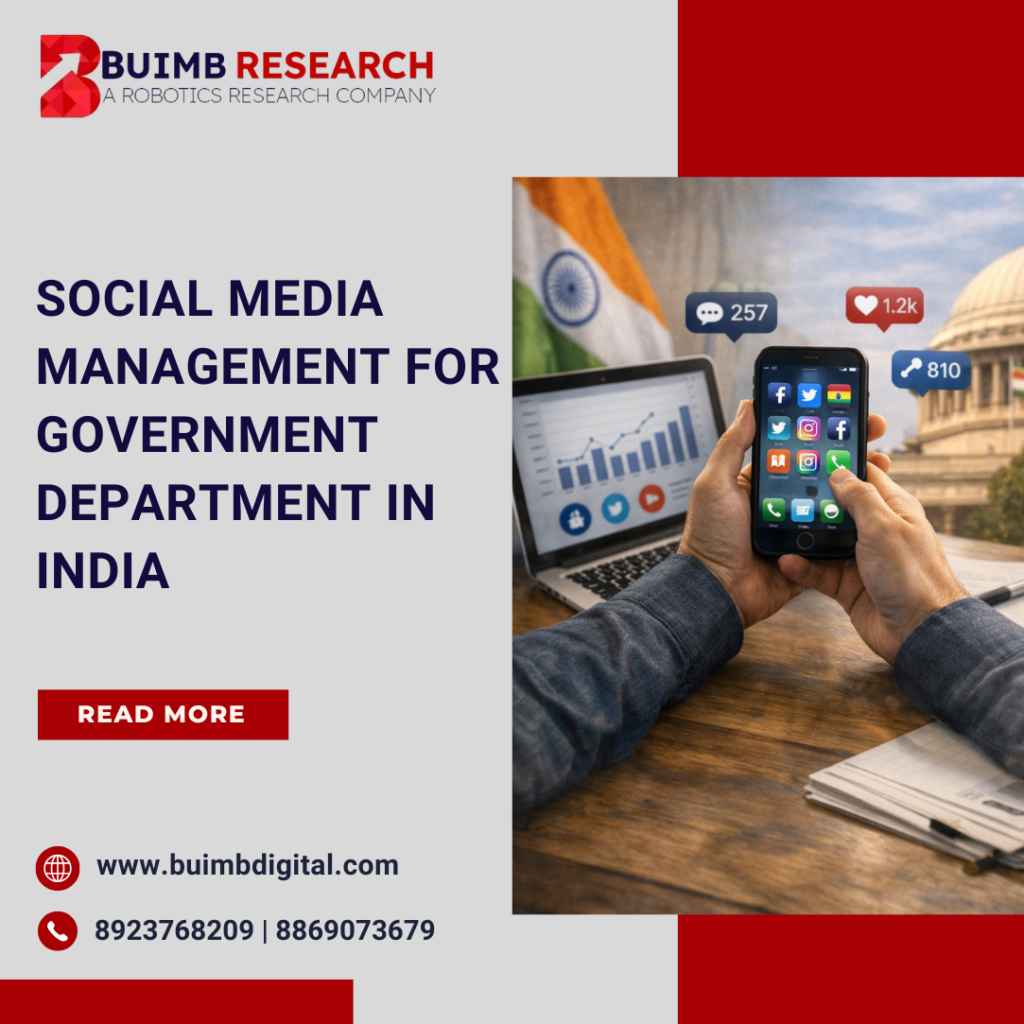
In India’s digital-first era, citizens expect government updates instantly — on their phones, not on physical notice boards. Platforms like Facebook, Instagram, YouTube, and X have become essential channels for advisories, scheme awareness, emergency alerts, and public engagement.
For government departments, social media is not about promotion — it is about timely, accurate, and responsible public communication. Every post must follow approvals, policy guidelines, accessibility norms, and clear messaging to serve diverse audiences and prevent misinformation.
Buimb Digital Marketing helps government departments manage this responsibility with a governance-aligned, structured approach. Through professional content creation, approval coordination, creative design, and real-time monitoring, Buimb transforms official social media pages into trusted, responsive communication bridges between government and citizens.
Connect with us to explore how the right digital marketing strategy can accelerate your business growth.
Scope of Social Media Management for Government Departments
The scope covers every aspect of online presence and citizen engagement. This includes:
- Official communication about policies, initiatives, schemes, and announcements.
- Public awareness campaigns for health, safety, environment, and development.
- Citizen service support through comments, direct messages, live chats.
- Live updates during emergencies like natural disasters or public events.
- Brand reputation management for trust and credibility.
- Citizen feedback collection and grievance redressal.
- Social listening to understand public sentiment and opinion.
Government social media isn’t a one-size-fits-all solution — it should adapt to departmental needs, stakeholder expectations, and legal compliances.
Key Objectives of Government Social Media Strategy
An effective government social media strategy always starts with clear, measurable objectives:
a) Transparency and Accountability
Social media helps departments share accurate information instantly — reducing misinformation and strengthening transparency.
b) Enhanced Citizen Engagement
Citizens are no longer passive recipients of information — they expect interaction, responsiveness, and solutions through social platforms.
c) Public Service Delivery
Social media improves service delivery by reducing time lag and enabling direct citizen support.
d) Reputation and Trust Building
Consistent communication ensures reliability and fosters trust among citizens.
e) Crisis Management
During emergencies, social media enables quick, reliable updates that can save lives and manage public perception.
f) Data-Driven Policy Insights
Social engagement data helps departments understand public needs and sentiment.
These objectives guide content, engagement styles, posting frequency, compliance frameworks, and performance evaluation.
Key Platforms for Government Social Media Presence
Different platforms serve different purposes — a strategic mix enhances outreach:
a) Facebook
Best for public announcements, campaigns, community building, and citizen conversations.
b) Twitter/X
Ideal for real-time updates, media communication, emergency alerts, hashtag campaigns, and public discourse.
c) Instagram
Visual storytelling platform for citizen engagement, short videos, reels, and campaign highlights.
d) LinkedIn
Professional platform for recruitment posts, policy discussions, research output, governance thought leadership.
e) YouTube
For educational videos, press briefings, tutorials, and campaign promotions.
Each platform is unique — government departments should adapt content formats and engagement strategies accordingly.
Content Strategy for Government Social Media
Strong content is the backbone of any social media strategy. Government content must be:
a) Clear and Citizen-Centric
Content should be easy to understand, informative, and helpful.
Example:
“How to Apply for Aadhaar Enrollment — Step-by-Step Guide”
b) Visual and Interactive
Infographics, videos, carousel posts, polls, and live streams increase retention and reach.
c) Informative and Accurate
Government pages must avoid ambiguous or unofficial information.
d) Localized and Inclusive
Content in multiple languages (Hindi + regional languages) ensures inclusivity.
e) Scheduled and Consistent
Consistency boosts engagement and builds audience trust.
By creating a well-structured content calendar that aligns with public holidays, national campaigns, and departmental events, government departments can maintain relevance.
Citizen Engagement Best Practices
Engagement isn’t just posting; it’s about building a community.
a) Respond Promptly
Reply to comments and messages to show responsiveness.
b) Use Interactive Formats
Polls, Q&A sessions, live streams, stories, and quizzes increase participation.
c) Acknowledge Feedback
Recognize citizen feedback publicly if appropriate — this builds goodwill.
d) Moderate Discussions
Civil discourse must be encouraged, and hate or misinformation moderated according to policy.
e) Celebrate Citizen Achievements
Highlight collaborations, citizen success stories, and participatory initiatives.
By fostering authentic engagements, government departments can strengthen public trust and encourage ongoing dialogue.
Crisis Communication & Reputation Management
Crisis communication is a critical function of government social media management.
a) Be First, Fast, and Accurate
In emergencies (e.g., natural disasters), citizens depend on timely and accurate information.
b) Coordinate Across Platforms
Ensure consistent messaging across Twitter, Facebook, Instagram, and YouTube.
c) Monitor Public Sentiment
Social listening tools help detect misinformation, misinformation trends, and public sentiment.
d) Respond with Authority
Use verified handles, official statements, and authoritative sources to address public concerns.
e) Use Multimedia Alerts
Videos, infographics, infographics, and alert icons improve comprehension.
Government accounts must be prepared with pre-approved crisis communication protocols.
Analytics, Reporting, and Performance Tracking
Tracking social media performance isn’t optional — it’s essential to optimize strategy.
Key Metrics Include:
- Reach and Impressions
- Engagement Rate
- Follower Growth
- Click-Through Rate (CTR)
- Message Response Time
- Hashtag Performance
- Audience Demographics
Using analytics tools (native dashboards or third-party sources), government departments can understand what’s working and where improvements are needed. Monthly performance reports help refine strategy.
Social Media Governance & Policy Compliance
For government departments, social media governance is vital for integrity and legal compliance.
a) Official Account Verification
Ensure all social accounts are officially verified and branded (logo, description, links).
b) Content Approval Workflow
Have a structured workflow that ensures content is approved before posting.
c) Avoid Political Bias
Government social media should remain neutral and serve citizens, not political interests.
d) Data Privacy and Security
Respect citizen privacy in message interactions and adhere to information security policies.
e) Accessibility Standards
Make content accessible to differently-abled users (closed captions, alt text, readable fonts).
f) Crisis Escalation Matrix
Define roles and responsibilities for emergency communication.
Clear policies protect departments from misinformation, compliance violations, and reputational risk.
Success Stories: Government Social Media in India
Social media is redefining government-citizen engagement in India. Examples include:
a) National Campaigns on Public Health
Government ministries have successfully used Instagram reels, Twitter campaigns, and Facebook live sessions to educate citizens about health campaigns and vaccination drives.
b) Disaster Alerts & Safety Updates
State governments leverage Twitter for real-time weather warnings and safety advisories.
c) Service Outreach
Departments like Transport, Revenue, and Municipal Corporations use social platforms to share procedural videos, application updates, and interactive FAQs.
These success stories highlight how structured social media strategies can yield measurable results.
Challenges in Government Social Media Management
Successful social media management also faces challenges:
a) Misinformation & Rumors
Online misinformation can spread faster than official updates.
b) Resource Constraints
Government departments may lack trained social media personnel.
c) Balancing Speed with Accuracy
Speed of posting must never compromise content accuracy.
d) Multilingual Audiences
Reaching diverse language audiences requires additional planning and resources.
e) Information Overload
Too much content can confuse citizens — quality must prevail over quantity.
Addressing these challenges requires strategic planning, technology adoption, and a trained workforce.
The Role of BUIMB DIGITAL in Government Social Media Strategy
BUIMB DIGITAL plays a strategic execution and advisory role for government departments that need structured, compliant, and citizen-centric communication across social platforms. Beyond routine posting, BUIMB DIGITAL builds a complete ecosystem that aligns governance objectives with measurable digital outcomes—ensuring transparency, responsiveness, and trust.
1) Strategy Aligned with National Digital Vision
Government communication today operates within the broader framework of the Digital India mission. BUIMB DIGITAL maps each department’s objectives to this vision—translating schemes, policies, and initiatives into accessible social content that reaches citizens where they are most active.
2) Governance-Compliant Social Media Framework
Public sector communication must follow official protocols such as the guidelines issued by the Department of Administrative Reforms and Public Grievances (DARPG). BUIMB DIGITAL designs approval workflows, content hierarchies, and publishing SOPs that ensure:
- Verified information only
- Multi-level content approvals
- Neutral, non-political tone
- Data privacy and accessibility compliance
3) Department Briefing & Objective Mapping
Every engagement begins with understanding:
- Department mandate and audience
- Ongoing schemes and campaigns
- Citizen pain points and FAQs
- Seasonal events, observances, and alerts
This insight becomes the foundation of a monthly and quarterly content roadmap.
4) Content Creation that Citizens Understand
Government language is often formal and complex. BUIMB DIGITAL converts it into:
- Simple, citizen-friendly posts
- Infographics, reels, and explainer videos
- Multilingual creatives (Hindi + regional languages)
- Step-by-step guides for public services
The focus is clarity, inclusivity, and usefulness.
5) Platform-Specific Execution
Each platform is used with intent:
- Facebook for community updates and campaigns
- Twitter (X) for real-time alerts and public communication
- Instagram for visual storytelling and awareness
- LinkedIn for policy thought leadership
- YouTube for tutorials and press briefings
6) Citizen Engagement & Community Management
BUIMB DIGITAL manages comments, messages, and public interactions with defined response protocols:
- Timely query acknowledgment
- Escalation matrix for grievances
- Moderation to prevent misinformation
- Public feedback tracking and reporting
7) Crisis Communication Readiness
During emergencies (weather alerts, public advisories, disruptions), BUIMB DIGITAL activates pre-approved crisis templates and rapid publishing systems to ensure accurate, timely updates across platforms.
8) Monitoring, Social Listening & Sentiment Analysis
Using monitoring tools, BUIMB DIGITAL tracks:
- Public sentiment
- Trending concerns
- Misinformation signals
- Campaign performance
These insights help departments respond proactively rather than reactively.
9) Performance Analytics & Monthly Reporting
Detailed reports translate social activity into measurable governance impact:
- Reach, engagement, and growth
- Response time and resolution tracking
- Best-performing content formats
- Recommendations for improvement
10) Training & Capacity Building for Officials
BUIMB DIGITAL also conducts orientation sessions for department staff on:
- Social media best practices
- Content approval processes
- Platform usage and safety
- Handling public communication responsibly
11) Long-Term Digital Reputation Building
Consistent, transparent communication builds a credible digital identity for departments. Over time, citizens begin to rely on official handles as primary sources of truth—reducing misinformation and strengthening public trust.
How BUIMB DIGITAL Helps
- Strategic Campaign Planning
- Content Creation & Localization
- Engagement & Community Management
- Crisis Communication Planning
- Performance Tracking & Reporting
- Policy Compliance Support
- Training & Capacity Building
By partnering with BUIMB DIGITAL, government departments can modernize their social media approach and deliver more effective citizen communication.
Conclusion
In an era where digital communication defines public perception, government departments must adopt professional social media management practices. Strategic content plans, robust engagement frameworks, crisis responsiveness, analytics, and governance policies form the pillars of successful government communication online.
Social media isn’t just an information channel — it’s a platform to build trust, serve citizens, and foster transparency. With expert support from partners like BUIMB DIGITAL, Indian government departments can unlock the full potential of social media and deliver governance that truly resonates with citizens.
References
- Government of India Digital India Initiative — https://www.digitalindia.gov.in
- Social Media Guidelines for Government Departments (India) — https://darpg.gov.in
- Twitter for Government Best Practices — https://business.twitter.com
- Facebook Government Outreach Playbook — https://www.facebook.com/business/marketing/gov
- Instagram for Good — https://about.instagram.com/community/impact