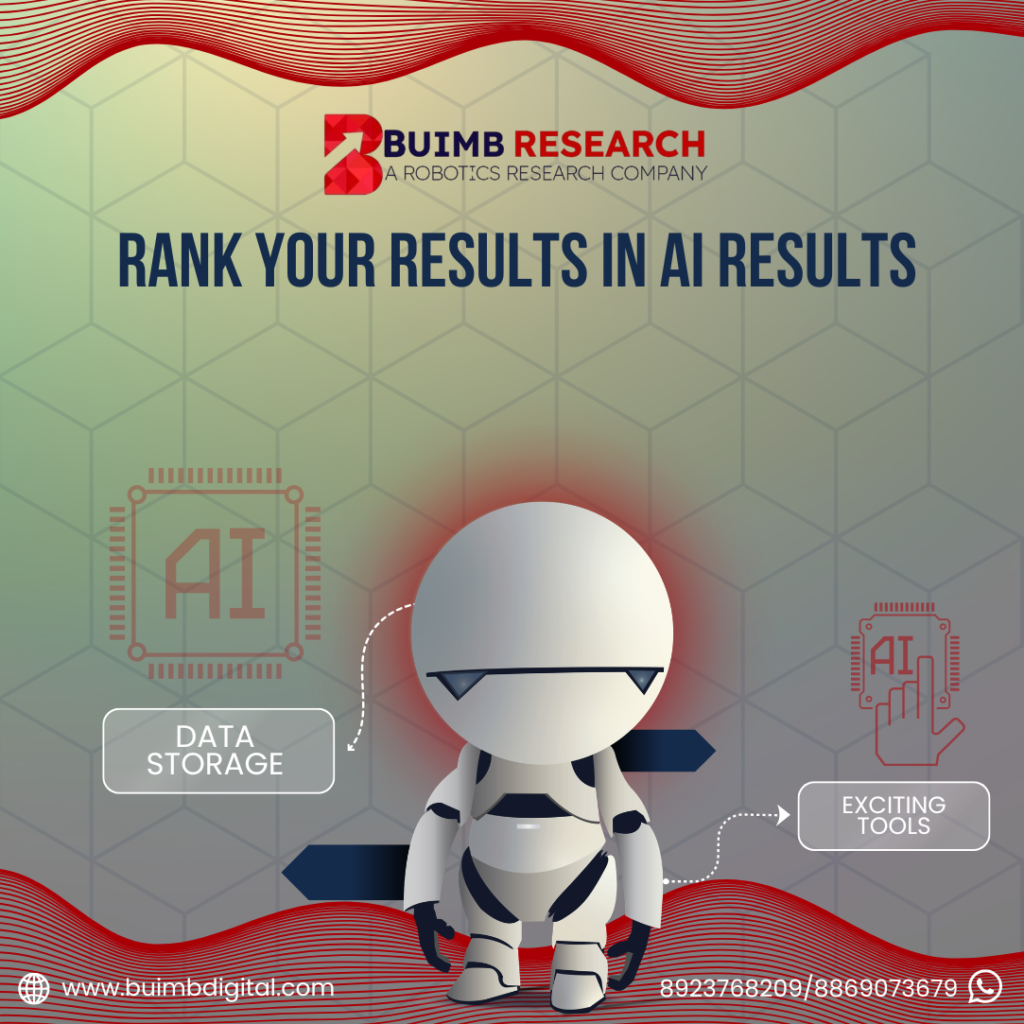
Rank Your Results in AI Results
Trusted by businesses across India, the UK, and the USA.
If you are looking to generate more leads, improve your online presence, or scale your marketing campaigns effectively, our team can help you achieve measurable results while implementing proven strategies to rank your results in AI results and increase your visibility across AI-powered search platforms.
From SEO and performance marketing to branding, campaign management, and marketing strategy consulting, we work with businesses to identify growth opportunities and implement marketing solutions that deliver real impact.
Connect with us to explore how the right digital marketing strategy can accelerate your business growth.
Rank Your Results in AI Results
The digital marketing landscape is undergoing a massive transformation. Traditional search engine optimization (SEO) is no longer the only strategy businesses need to focus on. With the rise of AI-powered search platforms such as Google’s AI Overviews, ChatGPT, Gemini, Perplexity, and other generative AI systems, businesses must learn how to rank their results in AI results to stay visible and competitive.
In this comprehensive guide, BUIMB Digital Marketing explains how businesses can improve visibility, build authority, and successfully rank their results in AI results.
Connect with us to explore how the right digital marketing strategy can accelerate your business growth.
Understanding AI Search Results
AI search results differ significantly from conventional search engine results pages (SERPs). Traditional search engines provide users with a list of websites based on ranking factors. AI-powered systems, however, analyze vast amounts of information and generate summarized responses.
When a user asks:
“How can I improve website traffic?”
An AI platform may provide a detailed answer while citing several authoritative sources rather than directing users to multiple websites.
This creates a new challenge:
How do you ensure your content becomes one of the sources AI systems choose?
The answer lies in AI Search Optimization (AISO).
Why Ranking in AI Results Matters
Businesses that appear in AI-generated responses gain several advantages:
Increased Brand Visibility
AI tools often highlight only a few sources. Being included can dramatically increase exposure.
Higher Trust and Authority
When AI systems cite your content, users perceive your brand as authoritative and credible.
More Qualified Traffic
Users who click through AI citations often have stronger intent and are closer to making decisions.
Competitive Advantage
Many businesses still focus exclusively on traditional SEO. Early adopters of AI optimization can secure stronger positions before competition intensifies.
How AI Systems Select Content
To rank your results in AI results, it is important to understand how AI systems evaluate content.
AI platforms generally prioritize:
- Authority
- Accuracy
- Expertise
- Freshness
- Structured content
- User intent satisfaction
- Source credibility
Content that clearly answers user questions is more likely to be referenced.
1. Create Topic Authority
One of the strongest signals for AI visibility is topical authority.
Instead of publishing random articles, build content clusters around specific subjects.
Example
If you operate a digital marketing agency, create comprehensive content around:
- SEO
- AI SEO
- Content marketing
- PPC advertising
- Social media marketing
- Local SEO
When AI systems recognize your website as an authority on a topic, your content becomes more likely to appear in generated responses.
Best Practice
Publish:
- Beginner guides
- Advanced tutorials
- Case studies
- Industry reports
- Expert interviews
This creates a strong topical ecosystem.
2. Answer Questions Directly
AI models prefer content that provides direct answers.
Instead of:
“SEO is an important digital marketing strategy that many businesses use.”
Write:
“SEO improves website visibility by helping webpages rank higher in search engine results, increasing organic traffic and potential conversions.”
Direct answers are easier for AI systems to extract and cite.
3. Use Semantic SEO
Semantic SEO helps AI understand context rather than simply matching keywords.
For the keyword:
Rank your results in AI results
Include related terms such as:
- AI search optimization
- AI SEO
- Generative engine optimization
- AI visibility
- AI content ranking
- Search generative experience
- AI-powered search
This strengthens topical relevance.
4. Optimize for E-E-A-T
Google emphasizes:
Experience
Demonstrate real-world expertise.
Expertise
Show deep subject knowledge.
Authoritativeness
Build recognition within your industry.
Trustworthiness
Provide accurate and reliable information.
AI systems often rely on similar signals.
Ways to improve E-E-A-T:
- Include author bios
- Publish case studies
- Add expert insights
- Use trustworthy references
- Keep information updated
5. Structure Content Properly
AI systems prefer well-organized content.
Use:
- H1 headings
- H2 headings
- H3 headings
- Bullet points
- Tables
- FAQs
Example Structure
What is AI SEO?
Definition
Benefits of AI SEO
List of advantages
How to Implement AI SEO
Step-by-step guide
Structured content improves machine readability.
6. Publish Original Research
AI systems value unique information.
Examples include:
- Industry surveys
- Proprietary studies
- Customer data
- Trend reports
- Benchmark analyses
Original research increases the likelihood of citations because AI models seek unique and authoritative information.
7. Build High-Quality Backlinks
Backlinks remain important.
Links from reputable websites signal trust and authority.
Strategies include:
- Guest posting
- Digital PR
- Expert contributions
- Research publications
- Industry partnerships
The stronger your backlink profile, the more likely AI systems are to consider your content authoritative.
8. Optimize Technical SEO
Technical SEO remains critical for AI visibility.
Focus on:
Website Speed
Fast-loading pages improve user experience.
Mobile Optimization
Most searches occur on mobile devices.
Crawlability
Ensure search engines can access your content.
Indexability
Pages must be properly indexed.
HTTPS Security
Secure websites earn greater trust.
9. Implement Structured Data
Schema markup helps AI understand webpage content.
Useful schema types include:
- Article Schema
- FAQ Schema
- Organization Schema
- Local Business Schema
- Product Schema
Structured data enhances machine comprehension and increases the chances of appearing in AI-generated answers.
10. Create Comprehensive Content
AI systems often favor content that fully addresses a topic.
Rather than publishing a 500-word article, create detailed resources covering:
- Definitions
- Benefits
- Challenges
- Strategies
- Examples
- FAQs
Comprehensive content increases citation opportunities.
AI Content Optimization Checklist
Use this checklist before publishing content:
✅ Target user intent
✅ Include primary keyword naturally
✅ Add related semantic keywords
✅ Use structured headings
✅ Provide direct answers
✅ Include statistics
✅ Add expert insights
✅ Optimize metadata
✅ Improve readability
✅ Build internal links
✅ Add external references
✅ Update content regularly
Common Mistakes to Avoid
Keyword Stuffing
Repeating “Rank your results in AI results” excessively can harm readability.
Thin Content
Short, low-value articles rarely earn citations.
Ignoring User Intent
Content should solve problems, not merely target keywords.
Outdated Information
AI systems prefer fresh and accurate content.
Poor Website Experience
Slow websites reduce trust and engagement.
The Future of AI Search Optimization
AI search is evolving rapidly.
Future trends include:
Conversational Search
Users increasingly ask detailed questions.
Multimodal Search
AI systems analyze text, images, videos, and audio.
Personalized Results
Responses may become tailored to individual users.
Voice Search Growth
Optimizing for natural language queries will become increasingly important.
Businesses that adapt early will gain substantial competitive advantages.
Why Partner with BUIMB Digital Marketing?
As AI search continues to reshape online visibility, businesses need strategies that go beyond traditional SEO.
BUIMB Digital Marketing helps brands:
- Optimize content for AI search engines
- Improve organic search performance
- Build topical authority
- Develop content marketing strategies
- Implement technical SEO improvements
- Enhance online visibility across AI platforms
By combining advanced SEO practices with emerging AI optimization techniques, BUIMB Digital Marketing helps businesses position themselves for long-term success in the evolving search landscape.
Conclusion
Learning how to rank your results in AI results is becoming essential for businesses that want to remain visible online. AI-powered search engines are changing how users find information, making traditional SEO only part of the equation.
To succeed, focus on:
- Creating authoritative content
- Answering user questions clearly
- Building trust and credibility
- Optimizing technical SEO
- Using structured data
- Publishing comprehensive resources
Organizations that embrace AI Search Optimization today will be better positioned to capture visibility, traffic, and conversions tomorrow.
Whether you’re a startup, local business, or enterprise brand, investing in AI-focused optimization can help secure your place in the future of search.
References
Connect with us to explore how the right digital marketing strategy can accelerate your business growth.
1. What does "Rank Your Results in AI Results" mean?
“Rank Your Results in AI Results” refers to optimizing your website and content so that AI-powered search engines and generative AI platforms, such as ChatGPT, Google AI Overviews, Gemini, and Perplexity, are more likely to reference, cite, or recommend your content in their generated responses.
2. Why is ranking in AI results important for businesses?
Ranking in AI results increases brand visibility, builds credibility, drives targeted traffic, and helps businesses reach users who rely on AI-powered search tools for information and recommendations.
3. How can I improve my chances of appearing in AI-generated search results?
To improve AI visibility, focus on creating high-quality content, answering user questions clearly, building topical authority, implementing structured data, improving technical SEO, and earning backlinks from reputable websites.
4. Is AI Search Optimization (AISO) different from traditional SEO?
Yes. Traditional SEO focuses on ranking webpages in search engine results pages, while AI Search Optimization (AISO) aims to make content easily understandable, trustworthy, and referenceable by AI systems that generate direct answers.
5. What type of content performs best in AI results?
Comprehensive guides, expert articles, case studies, original research, FAQs, tutorials, and data-driven content tend to perform well because they provide valuable information that AI systems can confidently reference.